

How to compare move-in and move-out condition in BC
Start a move-out comparison with the signed move-in condition report, not your memory of the unit. For each room and item, place the earlier note and photo beside the current condition. Record what stayed the same, what changed, and any question that still needs an answer. This process helps a landlord plan repairs and gives both parties a clearer basis for discussing the unit's condition.
BC's Residential Tenancy Branch (RTB) says a move-out inspection follows the same process as move-in and is an opportunity to document and photograph the unit since the tenancy began. It also says a tenant is not responsible for reasonable wear and tear. Read the current RTB move-out guidance before making a deposit decision.
Bring the complete move-in baseline
Open the original condition report, its photos, and any signed addendum or note about repairs made during the tenancy. Check that the report identifies the unit and the items you are comparing. If a feature was already marked at move-in, carry that fact into the move-out review; otherwise an old defect can look like a new one.
For example, if the move-in report shows two chips on a cabinet door, a move-out photo of the same door should be compared with that note and image. A wider photo helps confirm it is the same door. The useful question is what is different now, not simply whether the door has any mark at all.
If the baseline is incomplete, record that limitation. Do not fill a missing move-in observation with an assumption. The RTB-27 form provides columns for the beginning and end of the tenancy, helping both sides compare the same areas.
Walk the same route, item by item
Use a simple sequence for each space:
- Find the move-in entry. Read its condition note and look at the matching photo.
- Inspect the item now. Photograph it from a similar angle, then take a close-up of any relevant change.
- Describe the difference. Write an observable fact, such as “new crack across the lower pane,” rather than a conclusion about fault.
- Mark follow-up work. Note cleaning or repair needs separately from the condition comparison.
Include hallways, appliances, fixtures, and exterior areas that formed part of the original inspection. Our photo documentation guide gives a repeatable photo plan for this walk-through.
Separate a change from responsibility
A changed condition does not, by itself, settle who pays. Ask whether the feature shows ordinary aging, a known maintenance issue, or possible damage beyond reasonable wear and tear. Use the photos and repair history to understand the timing. Record both parties' observations if they disagree instead of editing a disputed note into a single agreed story.
The RTB explains that reasonable wear and tear is natural deterioration from aging and reasonable use. Its moving-out guidance describes the distinction and links to its maintenance policy. For deposit steps and deadlines, use our separate BC security deposit guide and confirm the current RTB rules. An inspection record can support a claim, but it does not authorize a deduction on its own.
Review and preserve the result
Give the tenant a chance to review the move-out report and record any disagreement before signatures. Retain both reports, the relevant photos, and the final delivered package in your own records. Keep repair estimates or receipts with the related item if work is needed. This makes the history easier to understand for the next tenancy and helps avoid repeating a missed maintenance issue.
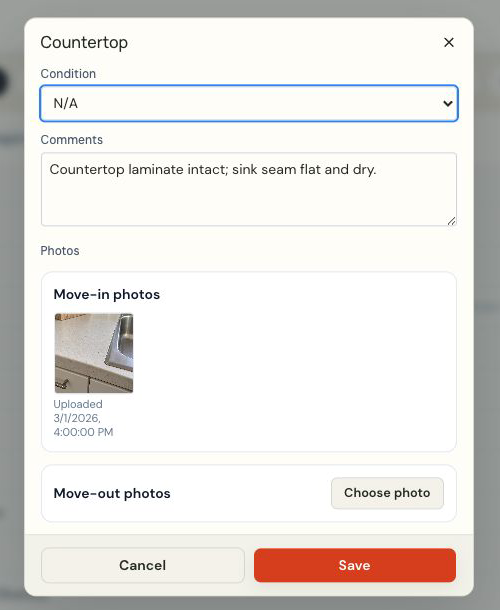
Anchor's rental inspection software for BC keeps item notes and photos together during the walk-through and lets you compare move-in and move-out records side by side. The tenant can review and sign through a link. Save the emailed final package after delivery; Anchor is a tool for organizing the record, not a decision maker for deposits or repairs.
A five-minute comparison check
- Can you match each move-out observation to its move-in entry?
- Are the photos of the same room and item, with enough context to compare?
- Have you noted pre-existing marks and repairs made during the tenancy?
- Are normal wear and uncertain causes kept separate from documented facts?
- Have both parties been able to review the report, and have you saved the final package?
If you are preparing the first inspection, begin with the BC rental inspection checklist.
This guide is general information, not legal advice. Check the current RTB inspection rules for your tenancy.